
LinkedIn has published a 36-page guide on getting your LinkedIn profile and posts cited by ChatGPT, Gemini, Copilot and Perplexity. It was written for marketing departments. Its own numbers point at individuals: 75 percent of LinkedIn citations in AI answers come from individual profiles, and members with under 10,000 followers earn 35 percent. If you're one person with a real point of view, this guide is worth more to you than to the companies it was written for. The four-page version follows.
Somewhere this week a buyer opened ChatGPT and typed a question that should have had your name in the answer.
"Who are the best supply chain consultants in the UK for a mid-market manufacturer?"
Three names came back. Yours wasn't one of them.
That deal was decided before you knew it existed.
A prospect said something to me in a conversation this week that I haven't been able to shake. "People do their due diligence. They Google my name. If I'm not on LinkedIn, they think I'm nobody, or a bot."
She is right. And it has just got worse, because now the buyer is asking the machine before they ever type your name into anything. LinkedIn's guide opens with the number: 94 percent of B2B buyers now use generative AI for research.
If I don't know you exist, I will never do business with you.That line has paid my mortgage for years. Now the machine has to know you exist as well.
What did LinkedIn's AI search guide actually say?
Strip out the stock photos and it says four things.
- Those everyday members earn more citations than every Company Page combined. CEOs account for 8.2 percent. Founders 7.5 percent. In LinkedIn's own words, "job title mattered less than expertise."
- 95 percent of citations go to original posts. Reshares get almost nothing.
If you run a one-person advisory firm, that's your number. The most-cited source in AI search is people like you.
Why is this good news if you're new to LinkedIn?
Because the guide's own data punishes the dormant expert harder than the beginner.
48 percent of cited content is under three months old. Content older than a year gets 12 percent. The profile that has sat quietly since 2019 with a corporate headline and no posts carries no weight at all. One fresh article this week beats ten years of silence.
The follower number the guide mentions is 2,000. Authors at that level tend to have their content surfaced more often. That's months away for someone who shows up three times a week and replies to people.
I've been on the wrong side of this before. An agency took my money, promised page one on Google, delivered nothing in three months, then told me I was too stupid to do it myself. My team had written the software they were using. So we did it ourselves and earned 4,000 page-one rankings with nothing fancier than our own brains.
As long as there is an algorithm indexing content, SEO is alive.It has just moved house. It now lives inside ChatGPT, and the front door is your LinkedIn profile.
Which AI are we actually talking about?
Two different systems, and people keep mixing them up.
The AI inside LinkedIn
Decides who sees your post in the feed. That's the algorithm everyone complains about.
The AI outside LinkedIn
ChatGPT, Gemini, Copilot. Decides whether a buyer who never opens LinkedIn hears your name at all. That's what this guide is about.
They read the same raw material: your profile and what you've published on it. The buyer doesn't care which one found you.
What stops experienced people from starting?
The same five things, every time. I heard all five in one conversation this week with a founder with twenty years in her field and a referral pipeline that has started to go quiet.
"I posted three times a week and the same six people read it. None of them were buyers."
Correct. Your posts have one job: when a buyer lands on your profile, or an AI pulls your name into an answer, proof of expertise is sitting there. Content validates. It doesn't prospect. The guide agrees: the citation goes to the individual profile, and the profile is where the posts live.
"I paid for Sales Navigator for a year and never used it."
Nobody showed you how. Sales Navigator is a search engine for buyers. Without a list of the people you want to talk to, it's an expensive icon on your screen.
"I got kicked off LinkedIn twice using automation. I lost 8,000 connections."
A competitor of mine with 33,000 followers once bragged to me about the AI tool he had switched on to "start conversations" for him. Three months later his profile was gone and his company with it. Every connection request we send for clients is sent by a human being, by hand, on a schedule.
40,525 requests in 4 months · 31.4% accepted · zero profiles lost"I paid per meeting and the people I met were trying to sell me something."
You paid for a number. Someone hit the number. The guide's own research says a third of enterprise buyers rank "could I defend this decision if it went wrong" as their number one emotional job, ahead of price and fit. A stranger booked by a script has no such reason to trust you. A stranger who read your article does.
"Referrals have carried me for years."
They have, and they will carry you until the quarter they don't. A branding expert this founder knows relied on referrals for twelve years. Then it dried up in a season. His reputation had never made it online, so when the phone stopped ringing there was nothing underneath.
What does one person actually do with this?
The guide's checklist starts with "form a cross-functional task force." You're the task force. The translation:
- Get verified as a human.
The guide skips this one, and it's the fastest fix I know. Passport and a face scan, done in minutes. Unverified profiles look like bots to buyers and to me. I don't accept connection requests from them, and neither do the people you want to reach.
- Pick one subject and stay on it.
The guide calls this a topic cluster. Scattered posting gets scattered results. A specialist who says one thing for 90 days beats a generalist who says everything for a year.
- Fix the profile before you write a word.
Every citation points somewhere. If it points to a headline that reads "Managing Director at Your Name Consulting" the AI has nothing to quote and the buyer has nothing to trust. Headline: who you help, what result, how. About section: three quarters of it answers what you do for people like the reader. Your two cats and your weekend cycling can wait.
- Write one article a week. 800 to 1,200 words.
Articles earn roughly 60 percent of LinkedIn's content citations. Posts get 40 percent. Give the article a title that reads like the question your buyer would type, because the title becomes the web address. "How do I..." beats "Some thoughts on..."
- Break that article into two or three posts.
200 to 300 words each. One idea per post. Put the subject in the first line, because the first line becomes the post's web address too. No hashtags up top. No emojis up top. They clutter the one line that matters.
- Name things and count things.
Of the 24 most-cited LinkedIn articles, 75 percent named specific companies or tools and 67 percent included hard numbers. Vague is invisible. "We cut onboarding from 14 weeks to 6" gets quoted. "We improve operational efficiency" doesn't.
- Spend an hour a day on other people's posts.
Fifteen words or more per comment, on the profiles of people you want to be found by. Highly cited content typically earns ten or more thoughtful comments. You earn those by giving them first.
- Check one setting.
Profile public. Content visible. Comments on. The guide says it plainly: if the AI can't access it, it can't surface it.
- Wait 30 days before judging.
Median time from publish to first AI citation is just under seven days. 75 percent of cited pages are picked up within 19 days. 90 percent within 37. The guide's own "common mistake to avoid" is declaring failure in week three.
What's the catch?
Page 15, in a box most people will scroll past.
"Following these steps won't, on its own, get you cited by LLMs. What can't be replicated is your unique point of view."LinkedIn, Unlocking AI Search Visibility, page 15
So the structure gets you read by the machine. The opinion gets you remembered by the person. If you have spent 24 years in a room being the expert, you already have the opinion. You just haven't written it down anywhere a stranger can find it.
One more number, because it's the one that pays.
of decision-makers say strong thought leadership makes them more receptive to a vendor reaching out.
AI search puts your name on the shortlist. The business happens after that: a connection request, a thank-you message, and a reply. Across those 40,525 requests, 26.9 percent of the people who accepted went on to reply to the first message. About one in four. That reply is where a conversation gets its chance to start. Everything I've ever said about LinkedIn ends in the same place.
Curiosity drives conversations. Conversations drive opportunities. The AI just widened the front door.
The machine can find you. Only you can make someone want to talk.
PS. Profile first or article first? A or B.
The one-person AI search checklist
- Verified as a human
- One subject, held for 90 days
- Headline says who you help, what result, how
- About section answers "what does this person do for me"
- One article a week, question in the title
- Two or three posts a week, subject in the first line
- Specific names, specific numbers
- An hour a day commenting, fifteen words minimum
- Profile public, comments on
- Judge at day 30, not day 3
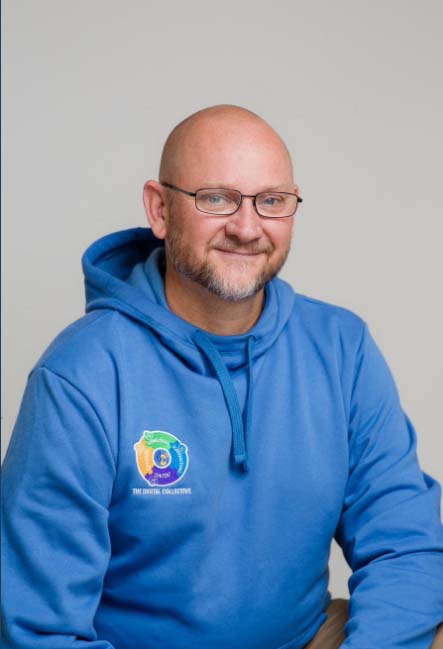
About the author
Kenneth Nel is the founder of The Digital Collective, a UK-based done-for-you LinkedIn outreach service for founders and independent consultants. Every connection request is sent by hand by a trained operator, no automation, no ghostwriting. The entry tier, Bronze, runs 100 hand-sent requests a week for founders new to LinkedIn or returning to a dormant account, at $550 a month with no contract. Pair it with Content Starter and you get a seat at the monthly group working session with one of our coaches.
Sources. LinkedIn, "Unlocking AI Search Visibility: The B2B Marketer's Guide to LinkedIn" (published 2026, 36 pages). Figures quoted from that guide and the sources it cites: 6sense (2025), Profound (2026), Meltwater (2026), Semrush (2026), LinkedIn x Edelman (2025), and LinkedIn internal data. TDC connection figures are from TDC's client benchmark workbook, April to July 2026, 24 client accounts with raw tracked data. Article published September 2026.